

Inner Chest Workout
(BEST INNER CHEST WORKOUT FOR BUILDING MUSCLE AT HOME)
The Ultimate Inner Chest Workout Guide
The best inner chest workout trains your whole chest, because the inner chest is the part of the pectoralis major next to your breastbone, not a separate muscle that can be worked on its own. The 6 exercises below combine four push-up variations with a dumbbell press and a dumbbell fly for your upper, middle and lower chest, and you can do them all at home.
Whether you’re a beginner or an advanced athlete, dumbbells and push ups can be tailored to fit your fitness level and goals. In this comprehensive guide, we’ll explore the anatomy of the chest muscles and present the best exercises and routines, all achievable with minimal equipment. Remember, to build a well-defined inner chest, you must work on overall chest development, as a larger, stronger chest will contribute to more prominent inner chest muscles.
The Ultimate Inner Chest Workout Guide
1. Anatomy of the Chest Muscles: A Closer Look at What Makes Up Your Inner Chest
2. Optimal Inner Chest Workouts: Identifying the Most Effective Routines for Muscle Growth
3. Exercise Videos and Related Guides
Before we dive into the best dumbbell and push-up exercises, let’s first examine the different areas of the pec major individually, so you can foster a stronger mind-to-muscle connection during your workouts. Each section is designed to be interactive, allowing you to click and jump directly to the topic of interest, facilitating an engaging and efficient learning experience tailored to your fitness journey.
1. Anatomy of the Chest Muscles: A Closer Look at What Makes Up Your Inner Chest
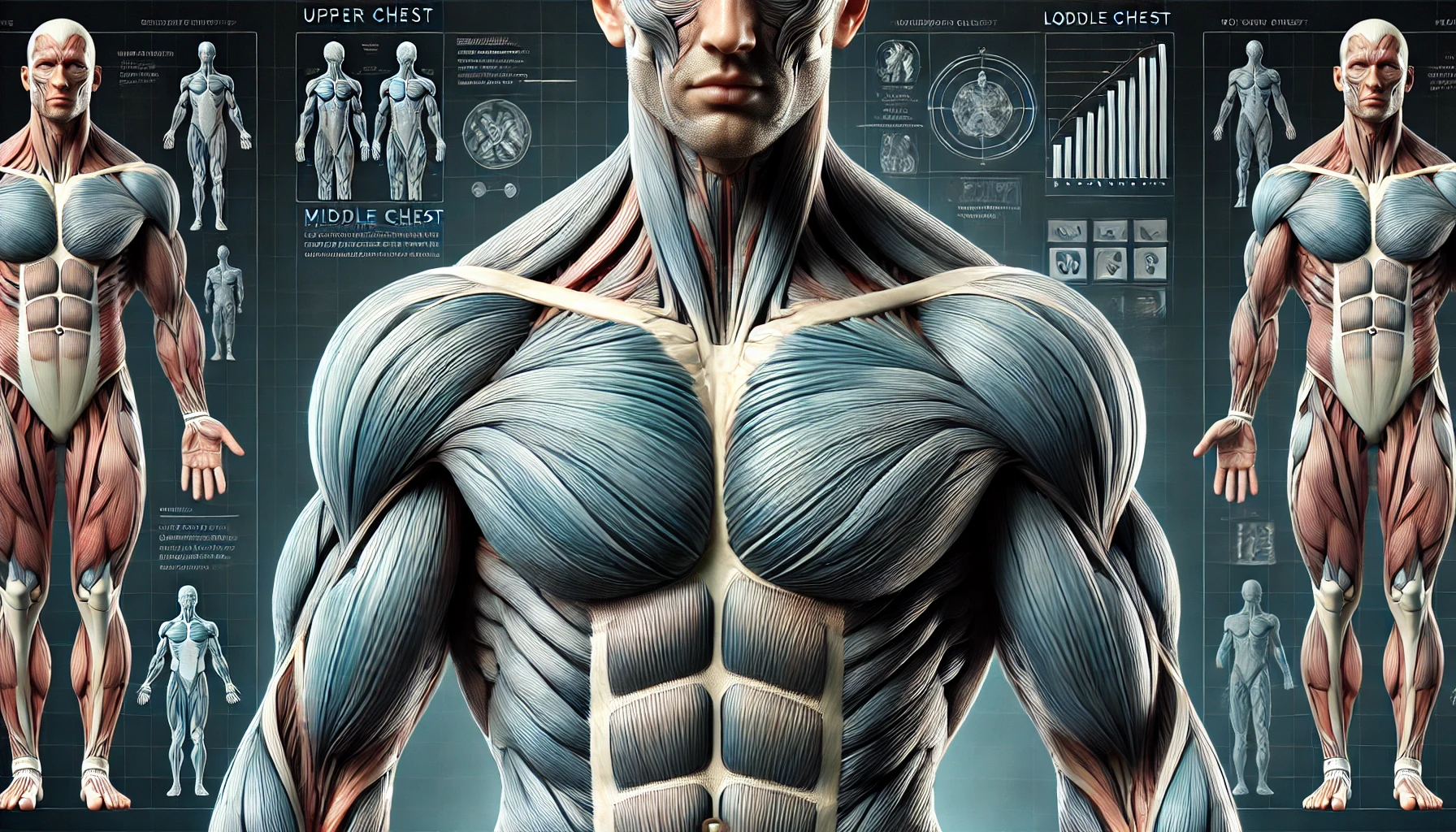
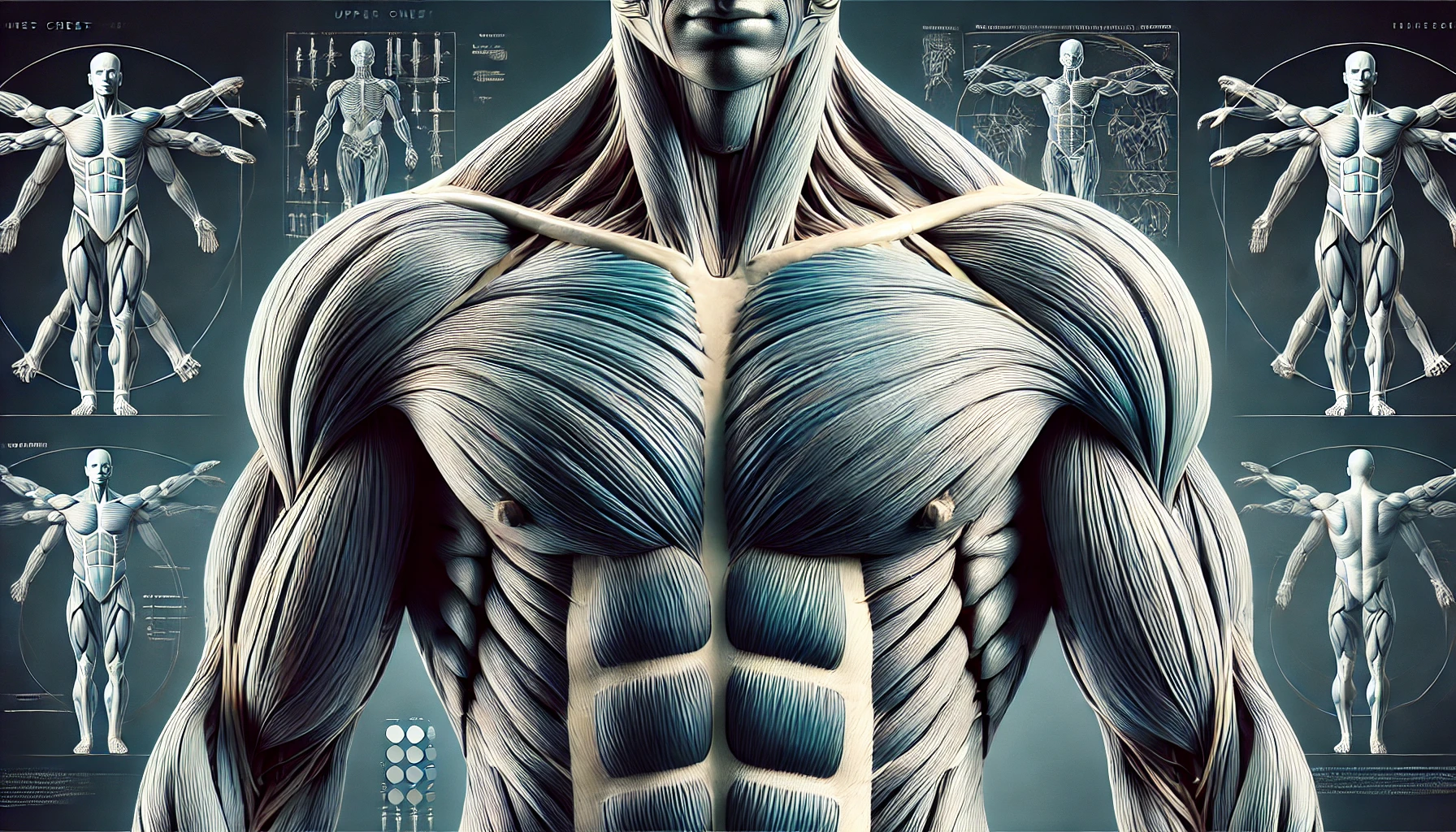
The pectoralis major muscle, which dominates the chest area, consists of three distinct segments.
The clavicular (upper) fibers start at your collarbone and run diagonally to your upper arm bone (humerus), forming the upper part of the chest. Raising your feet in a Decline Push Up tilts the push toward your head, a little like an incline bench press; the higher your feet, the steeper the tilt. In one study, incline presses at 44 and 56 degrees worked these upper fibers more than a flat press, while a 28-degree incline did not (Trebs 2010, in the references below). Raising your feet also makes the push-up harder: in a study of 23 adults, push-ups with the feet raised on a box produced a higher peak force than every other push-up variation tested (Ebben 2011). Put your feet on a chair and your hands on the floor, in line with or slightly wider than your shoulders, and keep a straight line from head to heels as you lower.
Decline Push Ups (Clavicular Head)
The sternocostal (middle) fibers start along your breastbone (sternum) and run across to your upper arm, forming the middle of the chest. The inner chest, the area next to your breastbone, is the inner end of these fibers, not a separate muscle. Military Push Ups work these fibers along with the rest of your chest and your triceps, and build strength and endurance without any special equipment.
Military Push Ups (Sternal Head)
The abdominal (lowest) fibers start below the breastbone, from the tissue that covers your upper abs, and run diagonally up and out to your upper arm, forming the lower edge of the chest. Decline Fly is a dumbbell fly done on the floor with your hips raised: lie on the ground with your feet flat and knees bent, and lift your hips to create a decline angle. Hold a dumbbell in each hand above your chest, palms facing each other. Open your arms wide in a fly motion, lowering the dumbbells to the sides. Return the dumbbells back to the starting position by bringing them together above your chest.
Decline Fly (Abdominal Head)
Understanding how to engage these muscle groups with strategic exercise alignment enhances both the effectiveness of your workouts and the visual impact of your gains. Next, we’ll explore specific dumbbell and push-up exercises that utilize your available equipment to optimally target these areas.
2. Optimal Inner Chest Workouts: Identifying the Most Effective Routines for Muscle Growth
The best chest workout plan should target all three areas of the pectoralis major: upper, middle, and lower chest.
This can be achieved by selecting exercises that cater to the distinct orientations of the chest fibers in each of these areas. To truly enhance your chest, it’s essential to incorporate exercises that not only challenge these regions but also incorporate the principles of muscle stretching during the negative phase and muscle flexing during the positive phase of each exercise.
Writer Decline Push Ups – Feet Raised, Side to Side
How to Perform Writer Decline Push Ups
- Prepare Your Position: Start in a push-up position with feet on a sturdy chair.
- Execute the Movement: As you descend, shift your weight from one side to the other and then back to the center, mimicking a writer’s motion.
- Controlled Return: Push up to return to the start position.
- Repeat: Aim for 10-20 repetitions.
In and Out Push Ups – Close and Wide Hands
How to Perform In and Out Push Ups
- Prepare Your Position: Start in a standard plank position.
- Execute the Movement: Perform a push-up, then quickly jump your hands from a close position to a wide stance and back, performing a push-up at each position.
- Controlled Return: Ensure a controlled landing and maintain proper form throughout.
- Repeat: Continue for 10-20 repetitions.
Decline Chest Press – Hips-Raised Floor Press
How to Perform Decline Chest Press
- Prepare Your Position: Lie on the ground with knees bent and feet flat, lifting your hips to create a decline angle.
- Execute the Movement: Press the dumbbells up from chest level until your arms are fully extended above you.
- Controlled Return: Lower the dumbbells back down to the chest slowly and controlled.
- Repeat: Continue for the prescribed number of repetitions.
Remember, developing a strong and well-defined inner chest involves more than just targeting the main muscle groups. It’s crucial to overload each section and ensure that you work the muscles across their entire range of motion, which is key for optimal growth.
Try out the exercises in this section, and you’ll be on your way to a more prominent and powerful inner chest.
Which Angle Works Which Part of Your Chest?
In a study of 14 trained men, chest muscle activity was measured during the bench press at four bench angles (Lauver 2016, in the references below). Activity is shown as a percentage of each man’s maximum static effort, so it can go above 100%. The “closest exercise” column is our approximate match, not part of the study.
| Bench angle | Closest exercise in this guide | Upper chest, second quarter of the press* | Lower chest, whole press |
|---|---|---|---|
| Decline (−15°) | Decline Chest Press (hips raised) | 96.1% | 100.4% |
| Flat (0°) | Military Push Ups, In and Out Push Ups | 98.2% | 100.1% |
| Incline (30°) | Decline Push Ups and Writer Decline Push Ups (feet raised; a chair gives a gentler tilt than this bench) | 122.5% | 86.6% |
| Incline (45°) | — | 124.0% | 71.9% |
*From 26% to 50% of the time it took to press the bar up. Over the whole press, upper-chest activity was similar at every angle. Takeaway: the flat press worked both the upper and lower chest well, and push-ups press at a similar angle. Inclines added upper-chest activity during part of the press (raising your feet tilts a push-up toward an incline, though a chair gives a gentler tilt than these benches), while the decline did not beat the flat press for the lower chest.
If you’re looking for a comprehensive strength training regimen to enhance muscle definition and strength across all muscle groups, explore our LifeBuddy Apps to find the perfect program tailored to your goals and the equipment you have available.
3. Exercise Videos and Related Guides
Every exercise in this guide has its own page in our free exercise library, with a video demonstration, step-by-step form tips, common mistakes to avoid and the muscles it works:
- Decline Push Ups
- Military Push Ups
- Decline Fly
- Writer Decline Push Ups
- In and Out Push ups
- Decline Chest Press
Browse more in our chest exercises lists.
Related guides: chest workouts, an upper chest workout, a lower chest workout, a dumbbell chest workout and push-up workouts.
Want a ready-made plan? Dumbbell Home Workout builds dumbbell workouts for every muscle group around your goal, level and schedule.
Inner Chest Workouts FAQ
Not on its own. The inner chest is the part of the pectoralis major that attaches along your breastbone (sternum); it is not a separate muscle, so no exercise works only that area. Building your whole chest, especially the middle (sternocostal) fibers, with presses, push-ups and flys is what makes the inner chest look fuller. In one study, those middle fibers were more active on a flat bench press than on any of the inclines tested (Trebs 2010).
Yes, along with your triceps. In a study of 40 adults, push-ups with the hands close together produced more chest and triceps activity than push-ups with the hands wide apart (Cogley 2005). A second study found that the close-hand position mainly added triceps and rear-shoulder work (Youdas 2010), so no hand position works only the inner chest. In and Out Push Ups switch between a closer and a wider hand position, so you train both in one set.
The gap in the middle is your breastbone, and where your pecs attach to it is set by your anatomy, so no exercise can close it. What you can change is the size of the muscle beside it. Train your chest regularly and add sets gradually: a review of training studies found that more weekly sets built more muscle (Schoenfeld 2017).
For major inner chest gains with minimal equipment, these exercises are top choices:
- Writer Decline Push Ups – A harder push-up with your feet raised on a chair.
- In and Out Push Ups – Switches between close and wide hands to work your whole chest and triceps.
- Decline Chest Press – A dumbbell press on the floor with your hips raised, for your whole chest and triceps.
Accelerate inner chest development by focusing on exercises that target all three chest areas: upper, middle, and lower. Train your whole chest through a full range of motion, and add reps or weight as the exercises get easier. It’s advisable to train your chest at least twice a week: a review of training studies found that working a muscle twice a week built more muscle than once a week (Schoenfeld 2016).
REFERENCES
Lauver JD, Cayot TE, Scheuermann BW. Influence of bench angle on upper extremity muscular activation during bench press exercise. Eur J Sport Sci. 2016;16(3):309-16.
Try LifeBuddy's free workout apps
- Dumbbell Home Workout: build muscle at home with dumbbells
- Weight Loss Workout At Home: no-equipment workouts to lose weight
- Pilates Workout at Home: beginner-friendly mat and Wall Pilates