
Dumbbell Chest Workout
(BEST DUMBBELL CHEST WORKOUT FOR BUILDING MUSCLE AT HOME)
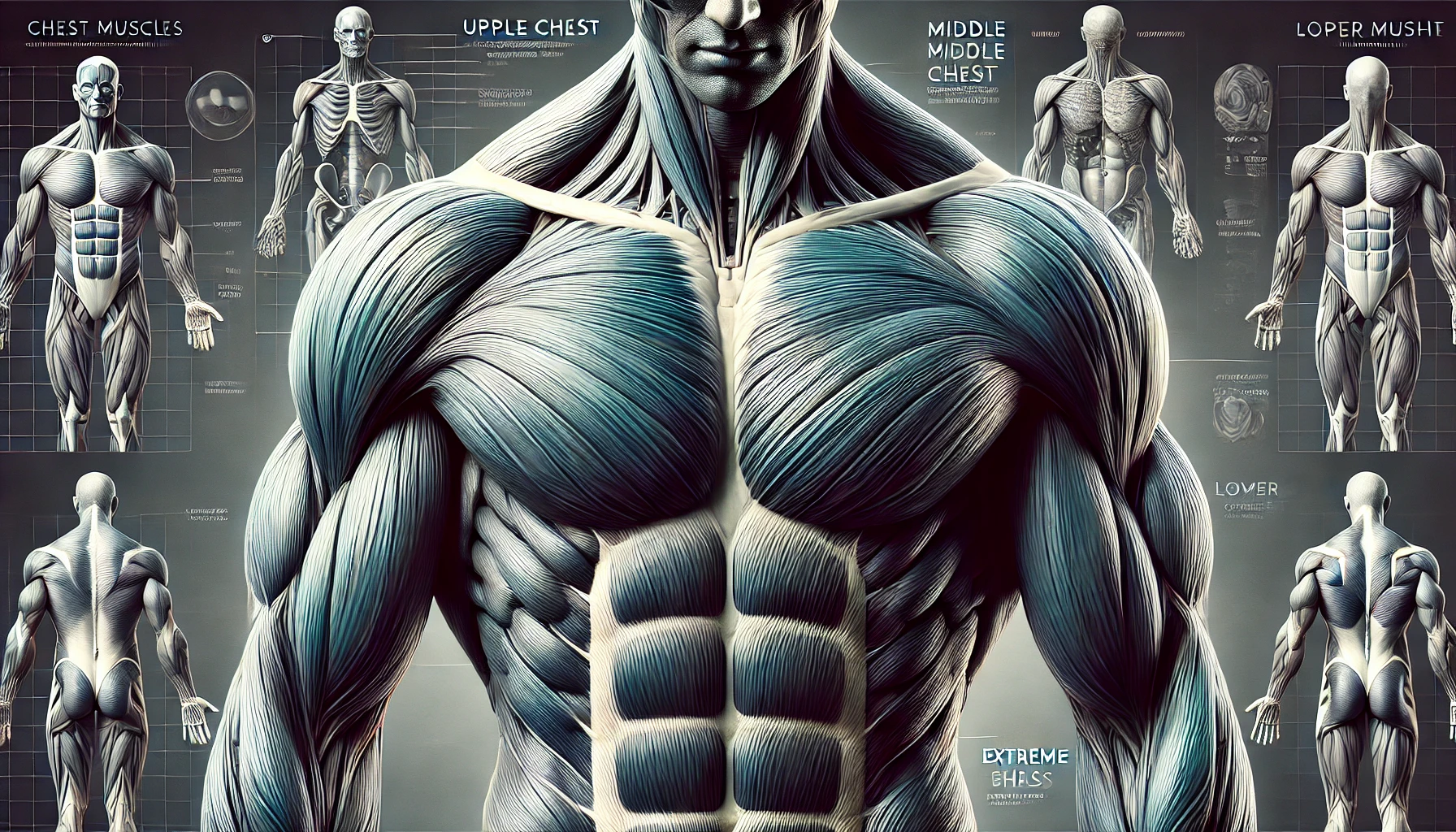
The Ultimate Dumbbell Chest Workout Guide
A good dumbbell chest workout combines presses and flys that work your upper, middle and lower chest: for example, a reverse-grip press, a flat dumbbell press, a fly and a decline press with your hips raised. You can do all 6 exercises below lying on the floor, so you do not need a bench.
Whether you’re a beginner or an advanced athlete, dumbbells can be tailored to fit your fitness level and goals. In this comprehensive guide, we’ll explore the anatomy of the chest muscles and present the best dumbbell exercises and routines, all achievable with minimal equipment.
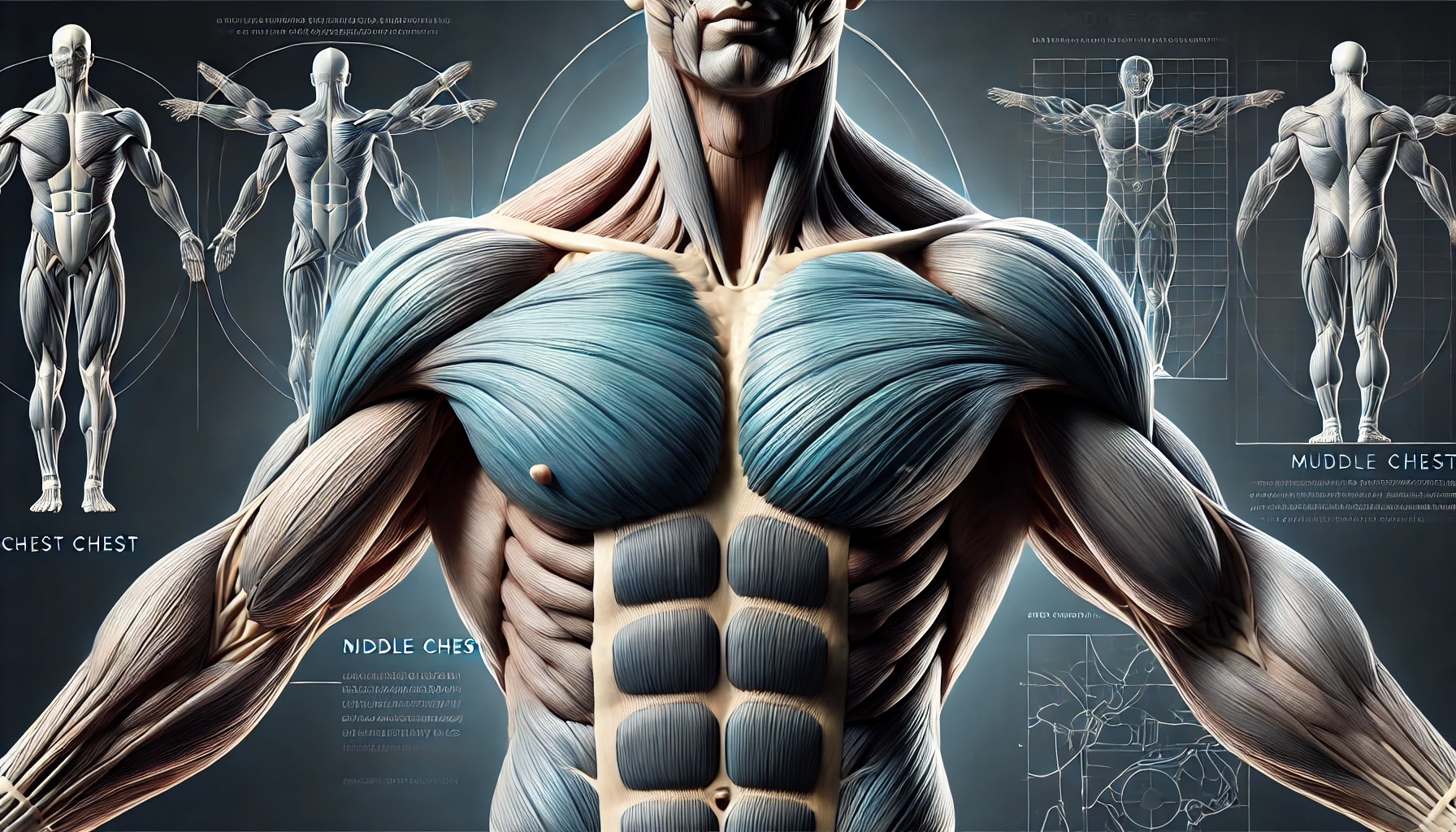
The Ultimate Dumbbell Chest Workout Guide
1. Anatomy of the Chest Muscles: A Closer Look at What Makes Up Your Pecs
2. Optimal Dumbbell Chest Workouts: Identifying the Most Effective Routines for Muscle Growth
3. Exercise Videos and Related Guides
Before we dive into the best dumbbell exercises, let’s first examine the different areas of the pec major individually, so you can foster a stronger mind-to-muscle connection during your workouts. Use the contents above to jump to any section.
1. Anatomy of the Chest Muscles: A Closer Look at What Makes Up Your Pecs
Your pectoralis major has two heads: the clavicular head, which starts at your collarbone, and the sternocostal head, which starts at your breastbone and rib cartilage. Part of the muscle also starts from the tendon of your external oblique, an abdominal muscle (Solari 2023). This guide splits it into three areas to train: upper, middle and lower.
The upper (clavicular) fibers start at your collarbone and extend diagonally toward the humerus, emphasizing the upper part of the chest. To train them, do the Half Way Rotating Reverse Press: lie flat with dumbbells at your shoulders, palms facing your head. Press up, rotating wrists so palms face each other at the top. Return to start, rotating wrists back.
Half Way Rotating Reverse Press (Clavicular Head)
The middle fibers, which start at your breastbone, stretch horizontally across the middle of the chest. A flat dumbbell press works this middle area, along with your front shoulders and triceps, and you can do it lying on the floor.
Dumbbell Press (Sternal Head)
The lowest fibers come partly from the tendon of your external oblique, an abdominal muscle, and run up and out to your upper arm, forming the lower chest region. To target this area, Decline Chest Fly can be effectively performed by lying on the ground, feet flat, knees bent, lifting your lower half. Hold dumbbells above your chest, palms facing each other. Open arms wide in a fly motion, then bring dumbbells back together.
Decline Chest Fly (Lower Chest Fibers)
Understanding how to engage these muscle groups with strategic exercise alignment enhances both the effectiveness of your workouts and the visual impact of your gains. Next, we’ll explore specific dumbbell exercises that utilize your available equipment to optimally target these areas.
Do dumbbells work your chest as well as a barbell? In a study of 12 resistance-trained men, three chest presses compared like this:
| Measure | Barbell | Dumbbells | Smith machine |
|---|---|---|---|
| Heaviest weight lifted once (1-RM) | Highest | 17% less than the barbell | About 3% less than the barbell |
| Chest (pectoralis major) activity | No difference between the three | ||
| Front shoulder activity | No difference between the three | ||
| Triceps activity | Higher than dumbbells | Lowest | Higher than dumbbells |
| Biceps activity | Middle | Highest | Lowest |
Muscle activity was measured with EMG during the lifts. Source: Saeterbakken 2011.
2. Optimal Dumbbell Chest Workouts: Identifying the Most Effective Routines for Muscle Growth
The best chest workout plan should target all three areas of the pectoralis major: upper, middle, and lower chest.
This can be achieved by selecting exercises that cater to the distinct orientations of the chest fibers in each of these areas. To truly enhance your chest, it’s essential to incorporate exercises that not only challenge these regions but also incorporate the principles of muscle stretching during the negative phase and muscle flexing during the positive phase of each exercise.
Alternating Reverse Press – Upper Chest Overload
How to Perform Alternating Reverse Press
- Prepare Your Position: Lie on your back with a dumbbell in each hand, palms facing your shoulders.
- Execute the Movement: Press one dumbbell upward until your arm is fully extended, then lower it back to the starting position.
- Controlled Return: Repeat with the other arm, alternating each press.
- Repeat: Continue this pattern for the desired number of repetitions.
Flys – Mid Chest Overload
How to Perform Dumbbell Flys
- Prepare Your Position: Lie on your back on the floor, dumbbells directly above the chest, palms facing each other.
- Execute the Movement: With a slight bend in the elbows, open arms wide until they almost touch the floor, then squeeze the chest to bring weights back up.
- Controlled Return: Avoid letting your arms drop too quickly or using momentum.
- Repeat: Perform 15-25 repetitions.
Decline Chest Press – Lower Chest Overload
How to Perform Decline Chest Press
- Prepare Your Position: Lie on the ground with knees bent and feet flat, lifting your hips to create a decline angle.
- Execute the Movement: Press the dumbbells up from chest level until your arms are fully extended above you.
- Controlled Return: Lower the dumbbells back down to the chest slowly and controlled.
- Repeat: Continue for the prescribed number of repetitions.
Remember, developing a strong and well-defined chest involves more than just targeting the main muscle groups. It’s worth training each area of your chest through your full range of motion and adding reps or weight over time.
Try out the exercises in this section, and you’ll be on your way to a more prominent and powerful chest.
If you’re looking for a comprehensive strength training regimen to enhance muscle definition and strength across all muscle groups, explore our LifeBuddy Apps to find the perfect program tailored to your goals and the equipment you have available.
3. Exercise Videos and Related Guides
Every exercise in this guide has its own page in our free exercise library, with a video demonstration, step-by-step form tips, common mistakes to avoid and the muscles it works:
- Half Way Rotating Reverse Press
- Dumbbell Press
- Decline Chest Fly
- Alternating Reverse Press
- Flys
- Decline Chest Press
Browse more in our chest exercises and upper body stretches lists.
Related guides: the best exercises for chest, an upper chest workout, a lower chest workout, an inner chest workout and chest stretches.
Want a ready-made plan? Dumbbell Home Workout builds dumbbell workouts for every muscle group around your goal, level and schedule.
Dumbbell Chest Workouts FAQ
Yes. In a study of trained men, the chest muscles were just as active in a dumbbell press as in a barbell bench press, although they lifted 17% less weight with dumbbells (Saeterbakken 2011). Equal activity does not prove equal growth, but heavy loads are not required: a review of 21 studies found that loads of 60% of your one-rep max or less built as much muscle as heavier loads when every set was taken to failure (Schoenfeld, Grgic 2017). Pick dumbbells heavy enough that the last few reps of each set are hard, and add reps or weight as you get stronger.
Turn your palms to face your head (a reverse grip). In a study of bench press grips, a reverse grip increased the activity of the upper part of the chest, the clavicular head, as well as the biceps (Lehman 2005). The Alternating Reverse Press in this guide uses that grip lying on the floor, and the Half Way Rotating Reverse Press starts with it, then turns your palms to face each other at the top.
If you are new to strength training, use a weight you can lift 8 to 12 times. For muscle growth, the American College of Sports Medicine recommends mostly 6 to 12 reps, with 1 to 2 minutes of rest between sets (ACSM 2009). Volume matters too: a review of training studies found that more weekly sets built more muscle (Schoenfeld 2017), so add sets gradually as long as you recover well.
For major chest gains with minimal equipment, these exercises are top choices:
- Alternating Reverse Press – Excellent for the upper chest and overall strength.
- Flys – Targets the middle chest with dynamic motion.
- Decline Chest Press – Works your lower chest with your hips raised.
Accelerate chest development by focusing on exercises that target all three chest areas: upper, middle, and lower. Train your chest at least twice a week: a review of training studies found that working a muscle twice a week built more muscle than once a week (Schoenfeld 2016). It’s also worth adding reps or weight as the exercises get easier.
REFERENCES
J Exerc Sci Fit. 2017 Jun;15(1):37-42. Low-load bench press and push-up induce similar muscle hypertrophy and strength gain.
Interv Med Appl Sci. 2012 Dec;4(4):217-20. Time course for arm and chest muscle thickness changes following bench press training.
Try LifeBuddy's free workout apps
- Dumbbell Home Workout: build muscle at home with dumbbells
- Weight Loss Workout At Home: no-equipment workouts to lose weight
- Pilates Workout at Home: beginner-friendly mat and Wall Pilates