

Pilates vs Yoga: Which Is Better for You? (KEY DIFFERENCES, BENEFITS AND VIDEO DEMOS TO HELP YOU CHOOSE)
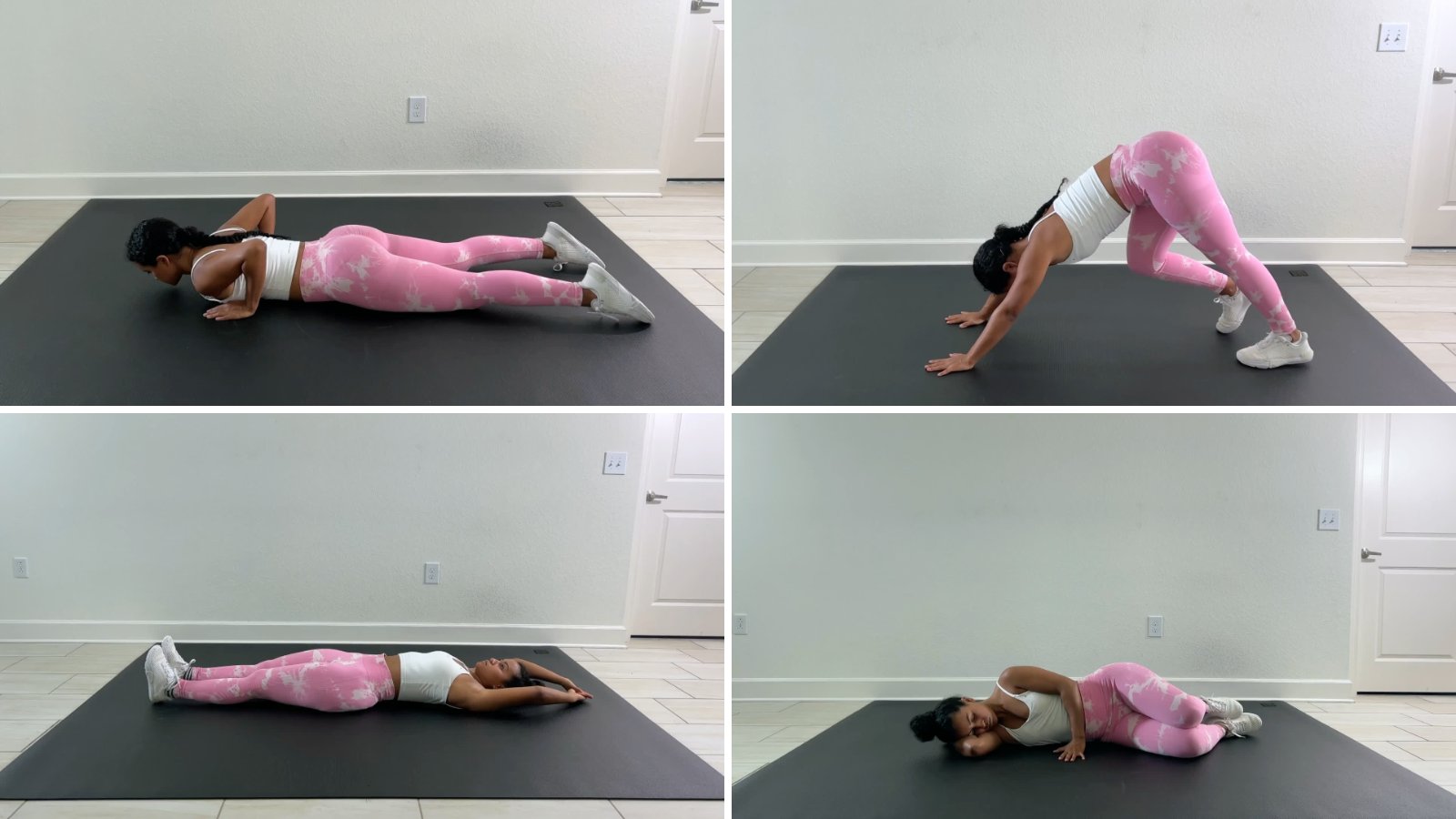
Pilates and yoga are both low-impact mat workouts, but they aim at different things. Pilates is a conditioning method built around core strength and slow, controlled repetitions, while yoga is an ancient practice from India that combines poses, breathing and meditation, with more time spent stretching. Neither is better overall: the right choice depends on your goal. Below you’ll find a side-by-side table, short video demos of four classic Pilates moves and four common yoga poses, and a goal-by-goal guide to help you choose.
In this guide
- Pilates vs yoga at a glance
- Benefits of Pilates
- Benefits of yoga
- What a session looks like
- Pilates moves vs yoga poses: video demos
- Is Pilates harder than yoga?
- Which is better for weight loss?
- Which is better for flexibility and strength?
- Pilates or yoga: which fits your goal?
- How to choose
- A sample week with both
- Frequently asked questions
Pilates vs yoga at a glance
| Pilates | Yoga | |
|---|---|---|
| Origins | Developed by Joseph Pilates in the early 20th century as a conditioning method | An ancient practice from India, with many modern styles |
| Main focus | Core strength, control and alignment | Flexibility, balance, breathing and relaxation (varies by style) |
| Typical moves | The hundred, roll-ups, criss-cross and side-lying leg work | Cat-cow, downward-facing dog, cobra, child’s pose, plus standing and balancing poses |
| How the moves work | A set number of slow, controlled repetitions, with the core working throughout | Poses held for several breaths, or linked from one to the next with the breath |
| Breathing | Coordinated with each movement | Central to the practice and often used for relaxation |
| Equipment | A mat; wall Pilates adds a wall, and studios also use reformer machines | A mat; sometimes blocks and straps |
| Intensity | Usually light to moderate | Gentle to vigorous, depending on the style |
What they have in common:
- Both are low impact and can be done at home on a mat.
- Both link your breathing to your movement.
- Both scale easily, from complete beginners to experienced exercisers.
- Both have some research support for low-back pain: Pilates in a Cochrane review, and yoga (a slight benefit) according to the NIH.
Benefits of Pilates
- Core strength and endurance: in a 12-week trial, twice-weekly Pilates improved abdominal endurance, hamstring flexibility and upper-body endurance. These Pilates ab exercises are a good place to start.
- Back pain: a Cochrane review found that Pilates reduced pain and disability more than minimal treatment, though not more than other exercise.
- Low impact and adaptable: easy to scale for beginners or experienced exercisers.
Benefits of yoga
According to the NIH’s National Center for Complementary and Integrative Health, research suggests yoga may help relieve stress and improve sleep and balance, relieve neck pain, and may have a small benefit for low-back pain. It notes that yoga may also help people with overweight or obesity lose weight and help people manage anxiety or depression symptoms.
What a session looks like
A typical mat Pilates session starts with breathing and gentle spine movement, then works through a series of core, hip and leg exercises, usually 5–10 controlled repetitions each, and ends with a few stretches. The pace is steady and the focus is on precise form. To see what that feels like, try these beginner Pilates exercises.
Yoga sessions depend on the style:
- Hatha: a slower class with poses held for a few breaths, a good starting point for beginners.
- Vinyasa or flow: poses linked together with the breath in a continuous sequence, which raises your heart rate.
- Power yoga: a vigorous, fitness-focused style of flow yoga.
- Yin and restorative: long, passive holds and supported poses for deep relaxation.
Pilates moves vs yoga poses: video demos
Watch how each one moves. In the Pilates moves, the core works the whole time through a set number of controlled repetitions. Yoga poses are usually held for a few breaths or flowed with the breath, with more emphasis on stretching. Some of the yoga poses below are shown as gentle, repeated movements; in a class, you would often hold a pose like downward-facing dog for several breaths instead. Many Pilates sessions also borrow poses like these as a warm-up or cool-down. Tap a video to play it.
Classic Pilates moves
The hundred
Lift your straight legs and your upper body off the mat, reach your arms toward your feet and pump them up and down: breathe in for 5 pumps and out for 5. Bend your knees to make it easier or if your lower back strains.
Roll-up
Lie with your arms overhead, then peel your spine off the mat one vertebra at a time to reach toward your feet, and roll back down just as slowly.
Criss-cross (bicycle)
With your hands behind your head and shoulders lifted, draw one knee in and turn the opposite elbow toward it as the other leg reaches long; switch sides with control and keep your elbows wide.
Side-lying leg circles
Lie on your side propped on your forearm, lift your straight top leg and draw big, controlled circles while the rest of your body stays still. Switch sides.
Common yoga poses
Cat-cow
On hands and knees, inhale as you drop your belly and lift your chest (cow), then exhale as you round your back toward the ceiling (cat). Let your breath set the pace.
Cobra pose
Lie face down with your hands under your shoulders and press your chest up while your hips stay on the mat. Lift only as high as feels comfortable, then lower with control.
Downward-facing dog (pedaling the feet)
With your hands and feet on the mat and your hips high in an upside-down V, bend one knee at a time and press the other heel toward the floor. In a still version, you hold the V for several breaths.
Child's pose
Kneel, sit your hips back toward your heels and fold forward with your arms stretched out in front. Rest here and breathe slowly; it is a common resting pose between harder poses.
For step-by-step form tips, common mistakes and the muscles each move works, see the exercise guides for the hundred, roll-up, bicycle, cat-cow, cobra, downward dog and child’s pose.
Is Pilates harder than yoga?
It depends on the style and your level. Pilates often feels harder on the abs, because most of its exercises work the core through slow, controlled repetitions. Gentle yoga styles such as hatha, yin and restorative are usually easier, while vinyasa and power yoga can be just as demanding, or more.
Measured by energy use, both usually fall in the light-to-moderate range. A 2026 exploratory review, based on limited, low-certainty evidence, estimated that a typical Pilates session is light to moderate in intensity, and a 2016 systematic review found that most yoga sessions and poses are light intensity, although a few sequences, such as sun salutations, reach moderate-to-vigorous intensity. If you are new to both, start with beginner Pilates or a gentle yoga class and build from there.
Which is better for weight loss?
Neither is a high-calorie workout. A typical Pilates session is light to moderate in intensity, most yoga is light intensity apart from faster sequences such as sun salutations, and a 2020 meta-analysis found that mat Pilates did not change body composition more than other exercise. Either can support weight loss as part of a routine that includes cardio and healthy eating. See is Pilates good for weight loss?
Which is better for flexibility and strength?
- Flexibility: both can improve it. Yoga usually spends more time in longer stretches, and in the 12-week Pilates trial above, hamstring flexibility improved too. If flexibility is your main goal, add a full-body stretching routine on non-Pilates days.
- Strength and toning: Pilates puts more emphasis on core strength, though many yoga styles build strength too. Neither one burns fat from a specific area, so how toned you look also depends on your overall body fat.
- Bone health: a 2021 meta-analysis of Pilates and yoga programs in women aged 45–78 found no significant difference in bone density compared with control groups. Ask your doctor which exercise suits your bones.
- Stress and relaxation: yoga’s focus on breathing and meditation makes it a natural choice for winding down.
Pilates or yoga: which fits your goal?
| Your goal | Better fit | Why |
|---|---|---|
| Core strength | Pilates | Most Pilates exercises are built around the core |
| Flexibility | Yoga (both help) | Yoga spends more time in longer stretches |
| Stress relief | Yoga | Breathing and meditation are part of the practice |
| Low-back pain | Either | Both have research support; ask a professional if you have a back condition |
| Weight loss | Neither on its own | Add cardio and healthy eating to either one |
| A gentle recovery day | Yoga (gentle styles) | Slow stretching without much effort |
| Structured workouts at home | Pilates | Clear exercises and repetitions are easy to follow |
How to choose
- Choose Pilates if you want a stronger core, controlled movement and structured, workout-style sessions.
- Choose yoga if you want more flexibility, stress relief and time for breathing and meditation.
- Choose both if you want a balanced routine. A simple split is Pilates 2–3 times a week and yoga once or twice.
Possible drawbacks
- Pilates: the core-heavy moves can feel hard at first, and reformer classes need studio equipment. Mat Pilates at home needs only a mat.
- Yoga: with so many styles, it can be hard to know where to start, and most yoga is light intensity, so it usually doesn’t replace cardio.
Safety tips
- According to the NIH, yoga is generally considered safe for healthy people when done properly. The most common injuries are sprains and strains, most often of the knee or lower leg.
- If you are new to yoga, skip extreme practices such as headstands, shoulder stands, the lotus position and forceful breathing, and learn with a qualified instructor if you can.
- If you are pregnant or an older adult, or you have a health condition, talk with your health care provider first. Conditions such as severe high blood pressure, glaucoma, balance problems or knee or hip injuries may mean modifying or avoiding some poses, and hot yoga should be avoided during pregnancy.
- For Pilates, start with the beginner version of each move and stop if anything hurts. If you have a back condition, ask a physical therapist which exercises suit you.
A sample week with both
| Day | Workout |
|---|---|
| Monday | Pilates (30 min) |
| Tuesday | Brisk walk or indoor walking workout (30 min) |
| Wednesday | Yoga (30–45 min) |
| Thursday | Pilates ab workout (15 min) + walk |
| Friday | Brisk walk or low impact cardio (30 min) |
| Saturday | Yoga or a long walk |
| Sunday | Rest |
Try Pilates at home. Pilates Workout at Home offers beginner-friendly mat and Wall Pilates sessions with a 56-day plan built around your schedule.
Frequently asked questions
What is the main difference between Pilates and yoga?
Pilates is a conditioning method built around core strength, with slow, controlled exercises repeated for a set number of reps. Yoga is an ancient practice from India that combines poses with breathing and meditation, and it spends more time holding stretches. Both are low-impact mat workouts, so the better choice depends on whether you want more core work (Pilates) or more flexibility and relaxation (yoga).
Is Pilates or yoga better for beginners?
Both are beginner-friendly. Pilates may suit you if you like structured, workout-style sessions with clear exercises and repetitions; yoga may suit you if you prefer stretching, breathing and relaxation. Start with beginner Pilates or a gentle yoga style such as hatha, and leave advanced poses like headstands and shoulder stands until you have more experience.
Can I do Pilates and yoga on the same day?
Yes. You could do Pilates in the morning and gentle yoga in the evening, or combine them in one session. A simple order is Pilates first, while your core is fresh, followed by a few gentle yoga stretches such as cat-cow and child’s pose to cool down. There is no strict rule, so pick the order you enjoy and will stick with.
Which burns more calories, Pilates or yoga?
It depends on the style and pace. A typical Pilates session is light to moderate in intensity, and a 2016 review found that most yoga is light intensity, although faster sequences such as sun salutations can reach moderate-to-vigorous intensity. So a fast, flowing yoga class or a brisk Pilates session uses more energy than a gentle one. To burn more calories, add cardio to either one.
Does Pilates tone more than yoga?
Pilates gives more direct core work, because most of its exercises are built around the abs and trunk, while yoga spreads the effort across many poses and many styles build strength too. Neither one burns fat from a specific area, though. How toned you look also depends on your overall body fat, which comes down to regular activity, including cardio, and healthy eating over time.
Is Pilates or yoga better for back pain?
Both have research support. A Cochrane review found that Pilates reduced back pain and disability more than minimal treatment, though not more than other exercise, and the NIH notes yoga may have a small benefit for low-back pain. Ask a doctor or physical therapist which suits your condition.
Is yoga or Pilates better for stress and anxiety?
Yoga is the more natural fit, because breathing and meditation are part of the practice. According to the NIH’s National Center for Complementary and Integrative Health, research suggests yoga may help relieve stress and anxiety symptoms, but there is little evidence of a benefit for people with anxiety disorders. If you have an anxiety condition, use yoga alongside professional care, not instead of it.
Do I need equipment for Pilates or yoga?
No. You can do both at home on a mat. Some home Pilates workouts use a wall for support, studio classes may use reformer machines, and yoga classes sometimes use blocks and straps to make poses easier. None of this is needed to get started.
Start with Pilates at home. Download Pilates Workout at Home and try a beginner session today.
References
- Kloubec JA. Pilates for improvement of muscle endurance, flexibility, balance, and posture. J Strength Cond Res. 2010. PubMed
- Yamato TP, et al. Pilates for low back pain. Cochrane Database Syst Rev. 2015. PubMed
- National Center for Complementary and Integrative Health (NIH). Yoga: Effectiveness and Safety. Source
- Vitor GBB, et al. Metabolic intensity and energy cost of Pilates exercises: an exploratory systematic review and meta-analysis. Syst Rev. 2026. PubMed
- Cavina APS, et al. Effects of the Mat Pilates Method on Body Composition: Systematic Review With Meta-Analysis. J Phys Act Health. 2020. PubMed
- Fernández-Rodríguez R, et al. Effectiveness of Pilates and Yoga to improve bone density in adult women: a systematic review and meta-analysis. PLoS One. 2021. PubMed
- Larson-Meyer DE. A Systematic Review of the Energy Cost and Metabolic Intensity of Yoga. Med Sci Sports Exerc. 2016. PubMed
This article is general information, not medical advice. Check with your doctor before starting a new exercise program, especially if you are pregnant, recently gave birth, or have a health condition, injury or joint pain.
Try LifeBuddy's free workout apps
- Dumbbell Home Workout: build muscle at home with dumbbells
- Weight Loss Workout At Home: no-equipment workouts to lose weight
- Pilates Workout at Home: beginner-friendly mat and Wall Pilates