
Arm Exercises
(BEST ARM EXERCISES FOR BUILDING MUSCLE AT HOME)
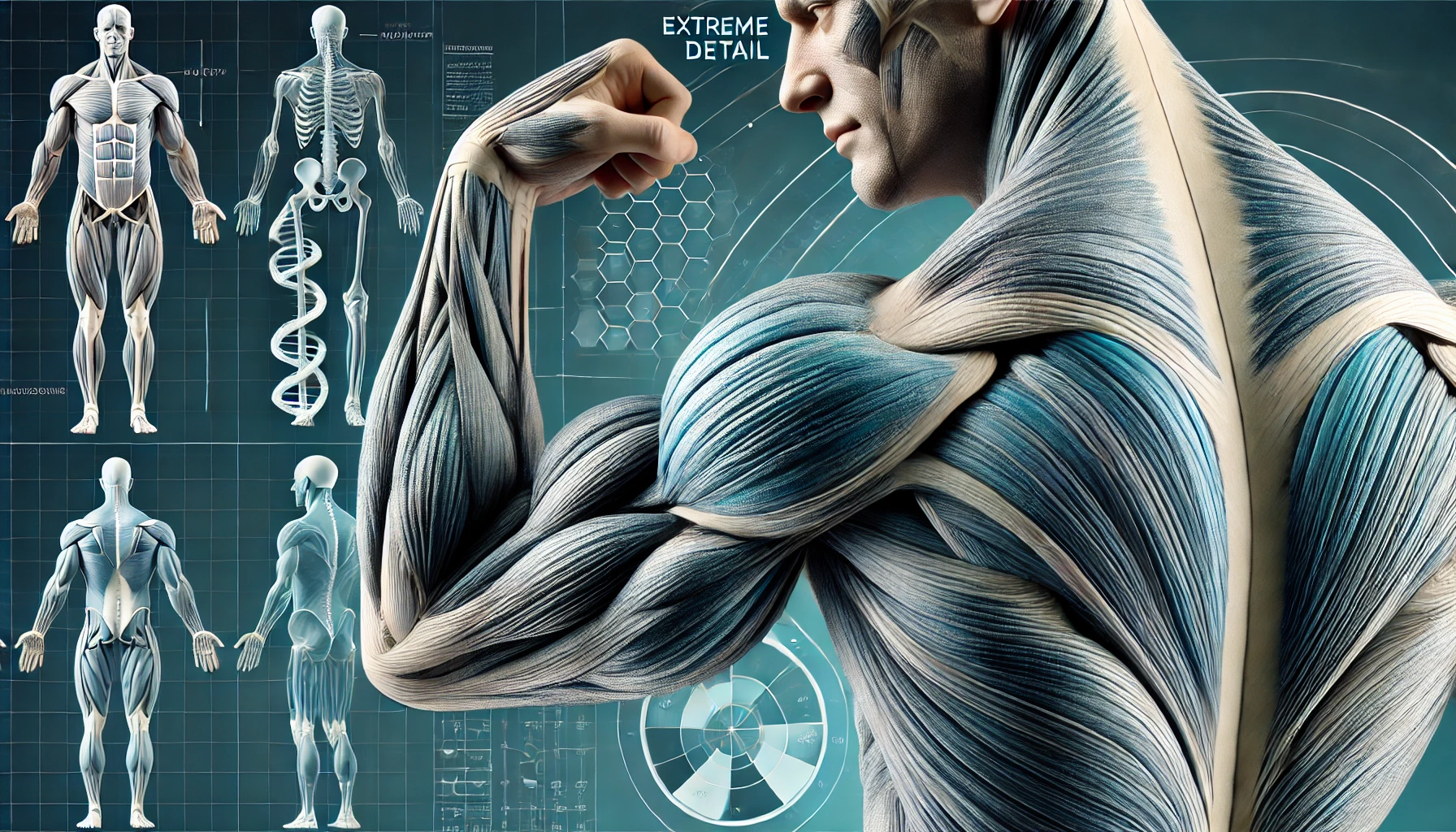
The Ultimate Arm Exercises Guide
The best arm exercises train all three areas of your arms: curls for your biceps, overhead extensions, skull crushers and kickbacks for your triceps, and hammer curls for your forearms. For muscle growth, do sets of 8 to 12 reps and train your arms at least twice a week; the table below shows the research behind those numbers.
This comprehensive guide will provide you with a detailed look at the anatomy of the arm muscles and present the best exercises to target these areas effectively. All you need is a pair of dumbbells and a sturdy chair.
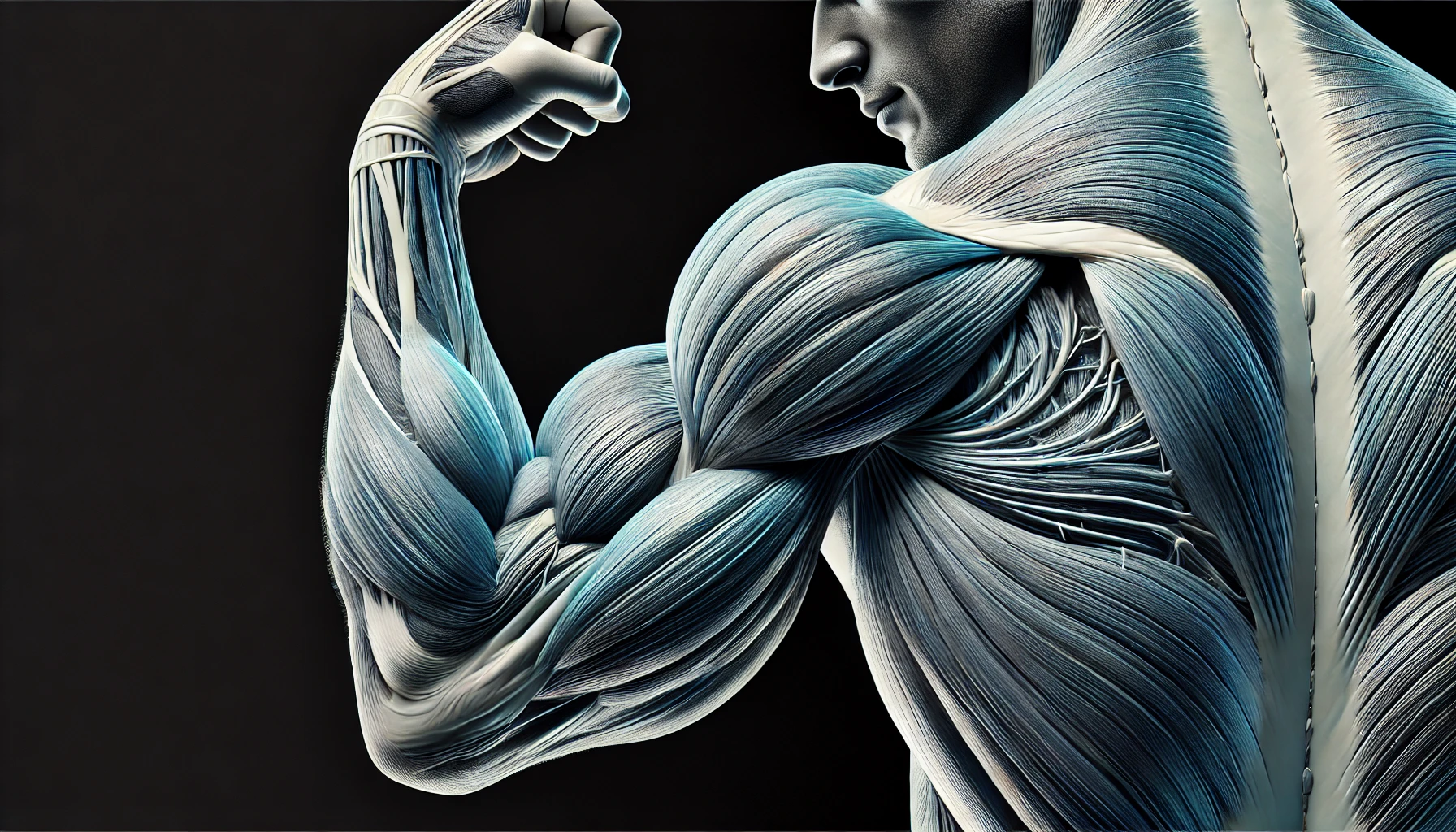
The Ultimate Arm Exercises Guide
1. Anatomy of the Arm Muscles: A Closer Look
2. Optimal Arm Workouts: Identifying the Most Effective Routines for Muscle Growth
3. Exercise Videos and Related Guides
Before we dive into the best exercises, let’s first examine the different areas of the arm muscles individually. Understanding these muscle groups will help you engage them more effectively during your workouts.
1. Anatomy of the Arm Muscles: A Closer Look
The biceps, triceps, and forearms are key areas for arm strength and size.
Alternating Curls work the biceps brachii, the main muscle at the front of your upper arm, one arm at a time.
Alternating Curls
The triceps, which make up a significant portion of the arm’s mass, can be effectively targeted with Hammer Kickbacks.
Hammer Kickbacks
The forearms can be strengthened with Hammer Curls, which also benefit the brachialis and brachioradialis muscles.
Hammer Curls
Skull Crushers, done lying on your back, work all three heads of the triceps as you straighten your elbows.
Skull Crushers
Understanding how to engage these muscle groups with strategic exercise alignment enhances both the effectiveness of your workouts and the visual impact of your gains. Next, we’ll explore specific exercises that utilize your available equipment to optimally target these areas.
2. Optimal Arm Workouts: Identifying the Most Effective Routines for Muscle Growth
The best workout plan should target all major areas of the arms for balanced development.
This can be achieved by selecting exercises that cater to the distinct orientations of the muscle fibers in each of these areas. To truly enhance your arm strength, it’s essential to incorporate exercises that not only challenge these regions but also incorporate the principles of muscle stretching during the negative phase and muscle flexing during the positive phase of each exercise.
Straight Curls – Biceps Overload
How to Perform Straight Curls
- Prepare Your Position: Stand with feet shoulder-width apart, holding dumbbells in front of you with palms facing forward.
- Execute the Curl: Curl the dumbbells towards your shoulders, keeping them together and elbows stationary.
- Controlled Return: Carefully lower the dumbbells back to the starting position.
- Repeat: Complete 8-12 reps for hypertrophy/strength or 12-16 for endurance/hypertrophy.
Single Dumbbell Extensions – Triceps Isolation
How to Perform Single Dumbbell Extensions
- Prepare Your Position: Stand or sit with a dumbbell held overhead with both hands.
- Lower the Weight: Bend your elbows to lower the dumbbell behind your head.
- Extend the Weight: Lift the dumbbell back overhead.
- Repeat: Perform 8-12 or 12-16 repetitions.
Remember, developing well-defined arms involves more than just targeting the main muscle groups. It’s crucial to overload each section and ensure that you work the muscles across their entire range of motion, which is key for optimal growth.
Try out the exercises in this section, and you’ll be on your way to bigger and stronger arms.
How Many Sets and Reps Should You Do for Arms?
Use these research-based numbers to put the exercises above together into your own arm workout.
| Setting | What the research suggests | Source |
|---|---|---|
| Reps per set | 8–12 reps when you are new to strength training; after that, mostly 6–12 reps for building muscle | ACSM 2009 |
| Rest between sets | 1–2 minutes for muscle-building sets | ACSM 2009 |
| Days per week | At least 2 for each muscle: training a muscle twice a week built more muscle than once a week | Schoenfeld 2016 |
| Sets per week | More weekly sets built more muscle: each extra set was linked to a 0.37% larger gain in muscle size, so add sets gradually | Schoenfeld 2017 (sets) |
| Weight | Light weights (60% of your 1-rep max or less) built similar muscle to heavy weights when every set was continued until no more reps were possible; heavy weights built more 1-rep max strength | Schoenfeld 2017 (loads) |
ACSM is the American College of Sports Medicine, and its numbers are general guidelines for healthy adults. The Schoenfeld papers are reviews that pooled the results of many training studies.
If you’re looking for a comprehensive strength training regimen to enhance muscle definition and strength across all muscle groups, explore our LifeBuddy Apps to find the perfect program tailored to your goals and the equipment you have available.
3. Exercise Videos and Related Guides
Every exercise in this guide has its own page in our free exercise library, with a video demonstration, step-by-step form tips, common mistakes to avoid and the muscles it works:
- Alternating Curls
- Hammer Kickbacks
- Hammer Curls
- Skull Crushers
- Straight Curl
- Single Dumbbell Extensions
Browse more in our bicep exercises and tricep exercises lists.
Related guides: bicep workouts, tricep workouts, forearm dumbbell exercises, how to get bigger arms and dumbbell skull crushers.
Want a ready-made plan? Dumbbell Home Workout builds dumbbell workouts for every muscle group around your goal, level and schedule.
ARM EXERCISES FAQ
Yes. Free weights such as dumbbells built as much muscle as machines in an 8-week study of 46 young adults: both groups increased biceps muscle thickness by a similar amount (Schwanbeck 2020). Light dumbbells can work too: a review found that light weights built similar muscle to heavy weights when every set was continued until no more reps were possible (Schoenfeld 2017, loads).
Not on their own. In a 12-week study, 104 adults trained only one arm. MRI scans of the whole upper arm showed no difference in fat loss between the trained and the untrained arm; a single skinfold measurement hinted at a local effect in men only (Kostek 2007). Arm exercises build the muscle underneath, while losing fat from your arms depends on losing fat overall, through regular exercise and your eating habits.
Muscle grows gradually. In a 12-week study, adults who trained their triceps with cable extensions twice a week increased triceps muscle volume by about 14% to 20% (Maeo 2023). Train consistently and add reps or weight as the exercises get easier.
For significant arm gains with minimal equipment, these exercises are top choices:
- Alternating Curls – Excellent for targeting the biceps.
- Hammer Kickbacks – Effective for overall triceps strength.
- Hammer Curls – Great for engaging the forearms.
Accelerate arm development by focusing on exercises that target all key areas: biceps, triceps, and forearms. Work each muscle through its full range of motion, and add reps or weight as the exercises get easier. It’s advisable to train your arms at least twice a week: a review of training studies found that working a muscle twice a week built more muscle than once a week (Schoenfeld 2016).
REFERENCES
Oliveira LF, Matta TT, Alves DS, Garcia MA, Vieira TM. Effect of the shoulder position on the biceps brachii emg in different dumbbell curls. J Sports Sci Med. 2009 Mar 1;8(1):24-9. PMID: 24150552; PMCID: PMC3737788.
Landin D, Thompson M, Jackson M. Functions of the triceps brachii in humans: a review. J Clin Med Res. 2018;10(4):290-293.
Try LifeBuddy's free workout apps
- Dumbbell Home Workout: build muscle at home with dumbbells
- Weight Loss Workout At Home: no-equipment workouts to lose weight
- Pilates Workout at Home: beginner-friendly mat and Wall Pilates