

Chest and Shoulder Workout
(BEST CHEST AND SHOULDER WORKOUT FOR BUILDING MUSCLE AT HOME)
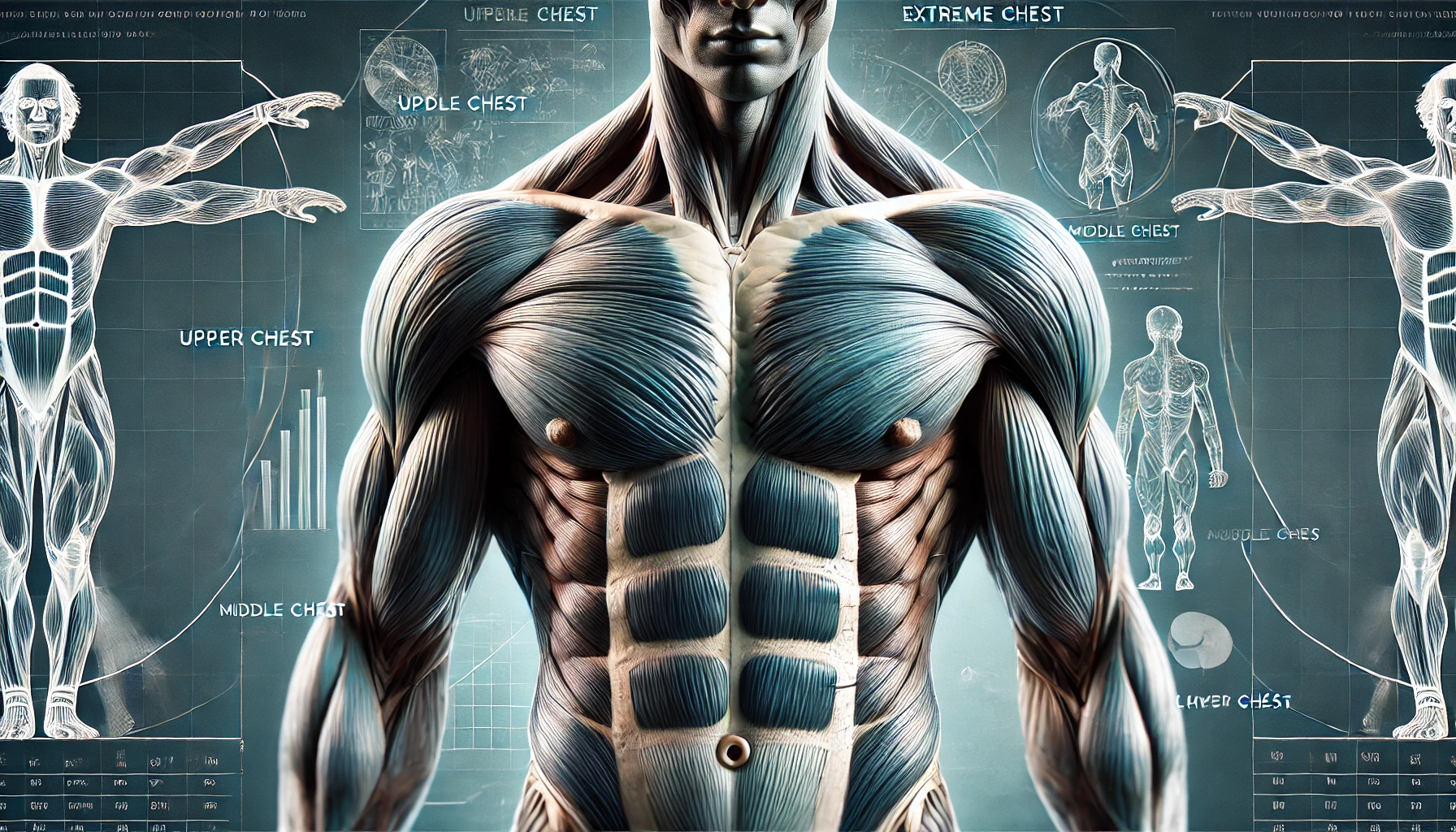
The Ultimate Chest and Shoulder Workout Guide
The best chest and shoulder workout combines push-ups or presses for your chest with a shoulder press and raises for your delts, because chest presses alone barely work your side and rear delts (Campos 2020). This 6-exercise plan does both at home: decline, standard and wide push-ups for your chest, then the shoulder press, lateral raise and lateral raise into front raise for your shoulders.
This comprehensive guide will provide you with a detailed look at the anatomy of the chest and shoulder muscles and present the best exercises to target these areas effectively. All you need is a pair of dumbbells and a sturdy chair.
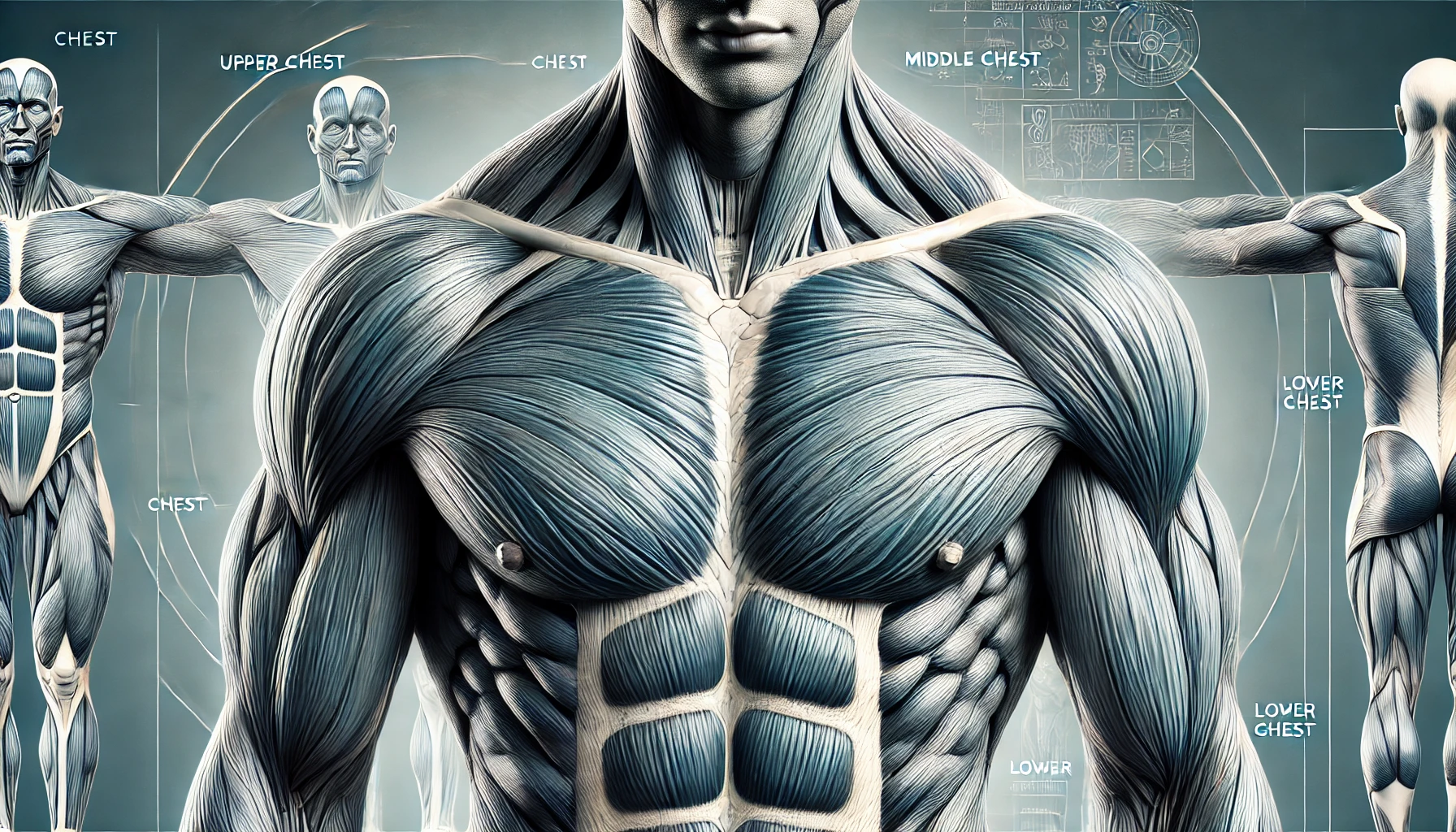
The Ultimate Chest and Shoulder Workout Guide
1. Anatomy of the Chest and Shoulder Muscles: A Closer Look
2. Optimal Chest and Shoulder Workout: Identifying the Most Effective Routines for Muscle Growth
3. Exercise Videos and Related Guides
Before we dive into the best exercises, let’s first examine the different areas of the chest and shoulder muscles individually. Understanding these muscle groups will help you engage them more effectively during your workouts.
1. Anatomy of the Chest and Shoulder Muscles: A Closer Look
The pectoral muscles, which form the bulk of the chest, and the deltoid muscles, which form the shoulder, are key areas for upper body strength.
The upper part of the pectoral muscles can be targeted with Decline Push Ups. This exercise emphasizes the upper chest region.
Decline Push Ups
The middle chest can be effectively targeted with Standard Push Ups, which focus on stretching and contracting the pectoral muscles.
Standard Push Ups
To target the shoulders, the Lateral Raise Into Front Raise is a key exercise that emphasizes the front and side deltoids.
Lateral Raise Into Front Raise
The Lateral Raise strengthens your side delts, which give your shoulders their width, and it also works your rear and front delts.
Lateral Raise
Understanding how to engage these muscle groups with strategic exercise alignment enhances both the effectiveness of your workouts and the visual impact of your gains. Next, we’ll explore specific exercises that utilize your available equipment to optimally target these areas.
2. Optimal Chest and Shoulder Workout: Identifying the Most Effective Routines for Muscle Growth
The best workout plan should target all major areas of the chest and shoulders for balanced development.
This can be achieved by selecting exercises that cater to the distinct orientations of the muscle fibers in each of these areas. To truly enhance your upper body strength, it’s essential to incorporate exercises that not only challenge these regions but also incorporate the principles of muscle stretching during the negative phase and muscle flexing during the positive phase of each exercise.
Why add shoulder moves to chest training? In one study, 13 trained men did 12 reps at 60% of their one-rep max on each exercise while the activity of the three parts of the deltoid was recorded, as a percentage of its maximum (Campos 2020). Push-ups weren’t tested, but they’re a pressing move like the bench press.
| Exercise | Front delts | Side delts | Rear delts |
|---|---|---|---|
| Bench press | 21.4% | 5% | 3.5% |
| Shoulder press | 33.3% | 27.9% | 11.4% |
| Lateral raise | 21.2% | 30.3% | 24% |
Wide Push Ups – Chest and Shoulder Engagement
How to Perform Wide Push Ups
- Prepare Your Position: Start in a push-up position but with hands set wider than shoulder-width apart.
- Execute the Movement: Lower your body towards the ground, keeping your core engaged and back straight.
- Controlled Return: Press back to the starting position.
- Repeat: Perform 10-20 repetitions.
Shoulder Press – Front and Side Delts
How to Perform Shoulder Press
- Prepare Your Position: Stand with feet hip-width apart, dumbbells at shoulder height, palms facing in toward each other.
- Execute the Standing Shoulder Press: Press the dumbbells overhead, turning your palms to face forward as your arms straighten.
- Controlled Return: Lower the dumbbells back to shoulder height.
- Repeat: Aim for 8-12 reps for hypertrophy/strength or 12-16 reps for endurance/hypertrophy.
Remember, developing well-defined chest and shoulders involves more than just targeting the main muscle groups. It’s crucial to overload each section by adding reps, sets or weight as an exercise gets easier, and to work the muscles through their full range of motion.
Try out the exercises in this section, and you’ll be on your way to stronger and more defined chest and shoulders.
If you’re looking for a comprehensive strength training regimen to enhance muscle definition and strength across all muscle groups, explore our LifeBuddy Apps to find the perfect program tailored to your goals and the equipment you have available.
3. Exercise Videos and Related Guides
Every exercise in this guide has its own page in our free exercise library, with a video demonstration, step-by-step form tips, common mistakes to avoid and the muscles it works:
- Decline Push Ups
- Standard Push Ups
- Lateral Raise Into Front Raise
- Lateral Raise
- Wide Push Ups
- Shoulder Press
Browse more in our chest exercises and shoulder exercises lists.
Related guides: chest workouts, dumbbell shoulder exercises, an upper chest workout, side delt exercises and a push day workout.
Want a ready-made plan? Dumbbell Home Workout builds dumbbell workouts for every muscle group around your goal, level and schedule.
CHEST AND SHOULDER WORKOUT FAQ
Your chest is mostly the pectoralis major, a fan-shaped muscle with an upper (clavicular) head that starts at your collarbone and a larger lower (sternal) head that starts at your breastbone; both attach to your upper arm. The smaller pectoralis minor lies underneath it. Your shoulder is capped by the deltoid, which has three parts: the front delts raise your arms forward and help in push-ups and presses, the side delts lift your arms out to the sides, and the rear delts pull them back.
More weekly sets tend to build more muscle: in a review of 15 studies, each extra set per muscle per week was linked to slightly more growth (Schoenfeld 2017). A practical start is 2 to 3 sets of each exercise in this workout, done twice a week, which gives your chest and your shoulders 12 to 18 sets each per week. Add sets gradually as long as you recover well between sessions.
Start with the one you most want to improve. A review of exercise-order studies found that you complete more reps on exercises done early in a session, whatever the size of the muscle, and that in untrained people strength rose most on the first exercise of a sequence (Simão 2012). Chest presses also work your front delts, so many people do push-ups first and finish with shoulder presses and raises, then swap the order from time to time.
For significant upper body gains with minimal equipment, these exercises are top choices:
- Decline Push Ups – Excellent for targeting the upper chest.
- Lateral Raise Into Front Raise – Effective for overall shoulder strength.
- Wide Push Ups – Great for engaging both chest and shoulders.
Combine push-ups or presses for your chest with a shoulder press and raises for your delts, and add reps, sets or weight as the exercises get easier. It’s advisable to engage in these targeted exercises at least twice a week: a review of training studies found that, with the same total weekly training volume, working each muscle twice a week built more muscle than once a week (Schoenfeld 2016).
REFERENCES
Kikuchi N, Nakazato K. Low-load bench press and push-up induce similar muscle hypertrophy and strength gain. J Exerc Sci Fit. 2017 Jun;15(1):37-42.
Ogasawara R, et al. Time course for arm and chest muscle thickness changes following bench press training. Interv Med Appl Sci. 2012 Dec;4(4):217-20.
Try LifeBuddy's free workout apps
- Dumbbell Home Workout: build muscle at home with dumbbells
- Weight Loss Workout At Home: no-equipment workouts to lose weight
- Pilates Workout at Home: beginner-friendly mat and Wall Pilates