

Back Workouts
(BEST BACK WORKOUTS FOR BUILDING MUSCLE AT HOME)

The Ultimate BACK Workouts Guide
The best back workout trains your upper, middle and lower back through four muscle groups: your upper traps, your middle traps and rhomboids, your lats and the erector spinae muscles along your spine. Rows work several of these at once, raises and flys add work for your upper and middle back, and the Superman trains your lower back. All 7 back exercises below use dumbbells, so you can do them at home, and each has a video demo.
Most people assume that targeting the upper, middle, and lower back in their training covers all bases for enhancing strength and size.
However, that’s just the beginning of a comprehensive back workout strategy! Back training is more intricate than it may initially appear, particularly if your back muscles are slow to develop. In this detailed guide, I’ll delve into the anatomy of the back muscles and present the best back exercises and workouts tailored for each region of the back, all achievable with minimal equipment.
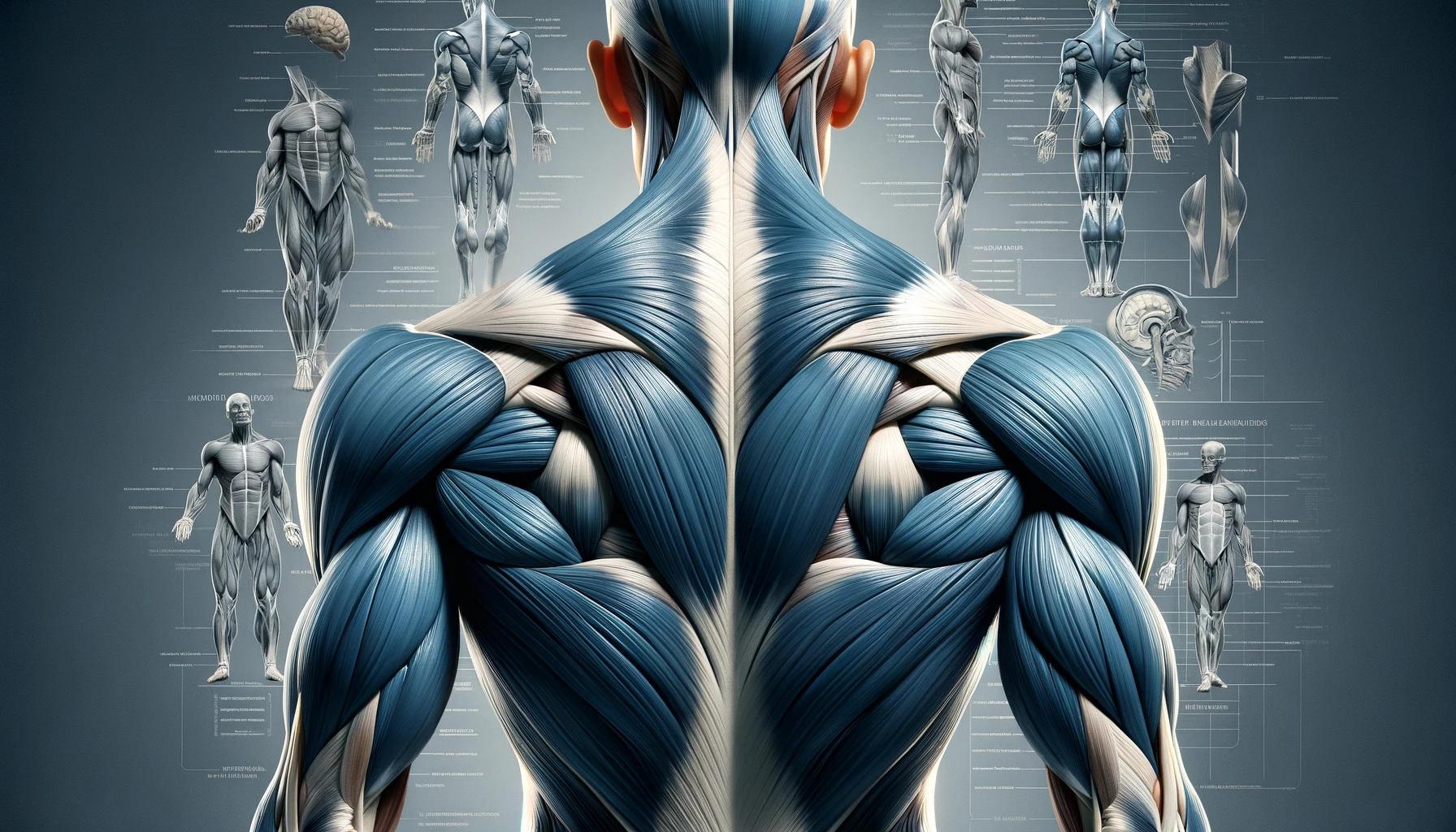
The Ultimate BACK Workouts Guide
1. Anatomy of the Back Muscles: A Closer Look at What Makes Up Your Back
2. Optimal Back Workouts: Identifying the Most Effective Routines for Muscle Growth
3. Exercise Videos and Related Guides
Before we dive into the best back exercises, let’s first examine the different areas of the back muscles individually, so you can foster a stronger mind-to-muscle connection during your workouts. Each section is designed to be interactive, allowing you to click and jump directly to the topic of interest, facilitating an engaging and efficient learning experience tailored to your fitness journey.
1. Anatomy of the Back Muscles: A Closer Look at What Makes Up Your Back
The back muscles, which dominate the posterior area, consist of several distinct segments.
Your upper trapezius (upper traps) runs from the back of your neck down and out to your shoulders and lifts your shoulders toward your ears. Upright rows, done by pulling a pair of dumbbells from your thighs up to chest height with your elbows leading, work this area along with your side shoulders.
Upright Rows (Upper Back)
Your middle traps and rhomboids run from your spine out to your shoulder blades and pull your shoulder blades together. Alternating rows, done leaning forward in a staggered stance and rowing one dumbbell at a time toward your hip, work this area along with your lats.
Alternating Rows (Middle Back)
Starting from the lower back and pelvis and running diagonally up to the upper arm, these fibers form the lats. To target this area, the Low To High Back Row can be effectively performed by hinging forward and rowing the dumbbells up toward your ribs as you lift your torso back up, which also works your lower back.
Low To High Back Row (Lats)
Your erector spinae muscles run up both sides of your spine, from your pelvis to your neck, and they straighten your back and hold it upright. The Weighted Superman works them as you lie face down, hold a light dumbbell out in front of you and lift your arms, chest and legs off the floor.
Weighted Superman (Lower Back)
Understanding how to engage these muscle groups with strategic exercise alignment enhances both the effectiveness of your workouts and the visual impact of your gains. Next, we’ll explore specific exercises that utilize your available equipment to optimally target these areas.
2. Optimal Back Workouts: Identifying the Most Effective Routines for Muscle Growth
The best back workout plan should target all three areas of the back: upper, middle, and lower back.
This can be achieved by selecting exercises that cater to the distinct orientations of the back fibers in each of these areas. To truly enhance your back, it’s essential to incorporate exercises that not only challenge these regions but also incorporate the principles of muscle stretching during the negative phase and muscle flexing during the positive phase of each exercise.
Closed Leaning Front Trap Raise – Upper Back Overload
How to Perform Closed Leaning Front Trap Raise
- Prepare Your Position: Stand with feet shoulder-width apart, hold one dumbbell by one end in both hands and hinge forward at your hips, keeping your back straight.
- Execute the Raise: Keeping your arms almost straight, raise the dumbbell in front of you to about head height.
- Controlled Lowering: Slowly return the dumbbell to the starting position.
- Repeat: Do 8-12 controlled reps per set, with a weight that makes the last few reps hard.
Rear Delt Fly – Middle Back Stretch
How to Perform Rear Delt Fly
- Prepare Your Position: Stand and hinge at the hips, dumbbells hanging down.
- Execute the Fly: Raise dumbbells out to the sides, squeezing shoulder blades.
- Controlled Lowering: Lower the dumbbells slowly back to the starting position.
- Repeat: Do 8-12 controlled reps per set, with a weight that makes the last few reps hard.
High Boy Lawnmowers – Upper Back and Rear Delt Overload
How to Perform High Boy Lawnmowers
- Prepare Your Position: Stand with dumbbells in hand, slightly lean forward in a light staggered stance.
- Execute the Row: Point elbows outward and pull the dumbbells up towards your chest.
- Controlled Motion: Avoid using momentum or arching the back.
- Repeat: Do 8-12 controlled reps per set, with a weight that makes the last few reps hard.
Remember, developing a strong, well-defined back involves more than just targeting the three main areas. It’s crucial to overload each area, adding reps or weight over time, and to work your back muscles through their full range of motion.
Try out the exercises in this section, and you’ll be on your way to a more prominent and powerful back.
How Many Sets and Reps Should You Do for Your Back?
Choose a row, a raise or fly, and the Superman from the exercises above, then use these research-based numbers to turn them into your own back workout.
| Setting | What the research suggests | Source |
|---|---|---|
| Reps per set | 8–12 reps when you are new to strength training; after that, mostly 6–12 reps for building muscle | ACSM 2009 |
| Rest between sets | 1–2 minutes for muscle-building sets | ACSM 2009 |
| Days per week | At least 2 for each muscle: training a muscle twice a week built more muscle than once a week | Schoenfeld 2016 |
| Sets per week | More weekly sets built more muscle: each extra set was linked to a 0.37% larger gain in muscle size, so add sets gradually | Schoenfeld 2017 (sets) |
| Weight | Light weights (60% of your 1-rep max or less) built similar muscle to heavy weights when every set was continued until no more reps were possible; heavy weights built more 1-rep max strength | Schoenfeld 2017 (loads) |
ACSM is the American College of Sports Medicine, and its numbers are general guidelines for healthy adults. The Schoenfeld papers are reviews that pooled the results of many training studies.
If you’re looking for a comprehensive strength training regimen to enhance muscle definition and strength across all muscle groups, explore our LifeBuddy Apps to find the perfect program tailored to your goals and the equipment you have available.
Want more options? Browse all 71 back exercises in our exercise library, each with a video demo.
3. Exercise Videos and Related Guides
Every exercise in this guide has its own page in our free exercise library, with a video demonstration, step-by-step form tips, common mistakes to avoid and the muscles it works:
- Upright Row
- Alternating Rows
- Low To High Back Row
- Weighted Superman
- Closed Leaning Front Trap Raise
- Rear Delt Fly
- High Boy Lawnmowers
Browse more in our back exercises and shoulder exercises lists.
Related guides: dumbbell back exercises, lat exercises, trap workouts, rear delt raises and a pull day workout.
Want a ready-made plan? Dumbbell Home Workout builds dumbbell workouts for every muscle group around your goal, level and schedule.
BACK WORKOUTS FAQ
A complete back workout trains four main muscle groups: your upper traps, which lift your shoulders; your middle traps and rhomboids, which pull your shoulder blades together; your lats, the large muscles that pull your arms down and back toward your body; and the erector spinae muscles along your spine, which straighten your back and hold it upright. Rows work several of these at once, so a good back workout pairs a row with a raise or fly for your upper back and a move such as the Weighted Superman for your lower back.
Yes. Every exercise in this guide uses dumbbells, and the rows work your lats, middle traps and rhomboids together. If your dumbbells are light, keep each set going until you can’t do another rep with good form: a review of 21 studies found that light weights (60% of your 1-rep max or less) built similar muscle to heavy weights when every set was continued until no more reps were possible (Schoenfeld 2017, loads).
Yes, although most back exercises, such as rows, need something to pull. Lying face down and lifting your arms, chest and legs off the floor, as in the Weighted Superman above, works the muscles along your spine even without the dumbbell, and our back exercises list includes more moves done lying face down with no equipment. As you get stronger, bodyweight alone gets easier, so adding reps or a pair of dumbbells keeps your back workout challenging.
For major back gains with minimal equipment, these exercises are top choices:
- Upright Rows – Excellent for the upper back and overall strength.
- Alternating Rows – Targets the middle back with dynamic motion.
- Low To High Back Row – Great for stretching and squeezing the lats.
Accelerate back development by focusing on exercises that target all three back areas: upper, middle, and lower. Work your back muscles through their full range of motion, and add reps or weight as the exercises get easier. It’s advisable to train your back at least twice a week: a review of training studies found that working a muscle twice a week built more muscle than once a week (Schoenfeld 2016).
REFERENCES
American College of Sports Medicine. American College of Sports Medicine position stand. Progression models in resistance training for healthy adults. Med Sci Sports Exerc. 2009 Mar;41(3):687-708.
Schoenfeld BJ, Ogborn D, Krieger JW. Effects of Resistance Training Frequency on Measures of Muscle Hypertrophy: A Systematic Review and Meta-Analysis. Sports Med. 2016 Nov;46(11):1689-1697.
Schoenfeld BJ, Ogborn D, Krieger JW. Dose-response relationship between weekly resistance training volume and increases in muscle mass: A systematic review and meta-analysis. J Sports Sci. 2017 Jun;35(11):1073-1082.
Schoenfeld BJ, Grgic J, Ogborn D, Krieger JW. Strength and Hypertrophy Adaptations Between Low- vs. High-Load Resistance Training: A Systematic Review and Meta-analysis. J Strength Cond Res. 2017 Dec;31(12):3508-3523.
Try LifeBuddy's free workout apps
- Dumbbell Home Workout: build muscle at home with dumbbells
- Weight Loss Workout At Home: no-equipment workouts to lose weight
- Pilates Workout at Home: beginner-friendly mat and Wall Pilates